
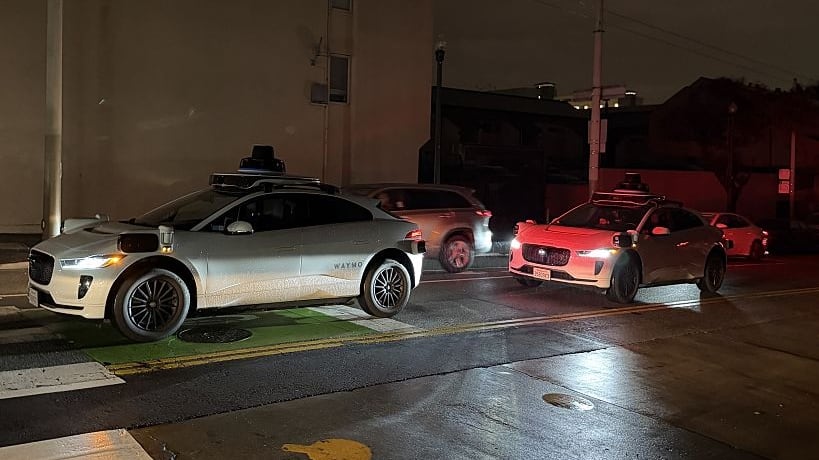
SAN FRANCISCO — A fire at an electric substation plunged the city of San Francisco into a blackout and caused Waymo robotaxis to stop dead.
The fire started on Dec. 20 and caused “significant and extensive” damage to the substation, USA Today reported.
But it wasn’t just the power grid that was impacted. The self-driving vehicles stopped working too.
People showed videos of the robotaxis stopped in the middle of intersections, causing backups.
Business Insider said that in one location, five Waymo vehicles were stopped in an intersection.
The power outage in San Francisco has caused Waymo’s self-driving cars to come to a halt, leading to traffic disruptions across the city. https://t.co/8vPCrKF9ze pic.twitter.com/kXjOJ3UN4c
— Breaking911 (@Breaking911) December 21, 2025
The company said that typically when traffic lights don’t function, the cars are programmed to treat them like a four-way stop, but added, “the sheer scale of the outage led to instances where vehicles remained stationary longer than usual to confirm the state of the affected intersections. This contributed to traffic friction during the height of the congestion,” the Times reported.
Waymo paused service on Saturday, but it returned by Dec. 21, Business Insider reported.
A company spokesperson is saying it is a learning experience.
“While the failure of the utility infrastructure was significant, we are committed to ensuring our technology adjusts to traffic flow during such events,” Suzanne Philion told USA Today. “We are focused on rapidly integrating the lessons learned from this event.”
Tow truck drivers said they had to remove Waymo taxis for hours during the blackout, The New York Times reported.
Waymo, which is owned by Google parent company Alphabet, has vehicles not only in San Francisco but also in Austin and Atlanta, Business Insider said.
Waymo has systems in place in their vehicles when they temporarily lose wireless connectivity.
“This technology is designed to work in the event of communication latency or dropout,” Matthew Wansley told the Times. “These cars are not supposed to rely on an immediate communications link.”
Wansley is a professor at the Cardozo School of Law and specializes in emerging automotive technology.
© 2025 Cox Media Group